Feeds:
Posts
Comments

Woggle

Hello,

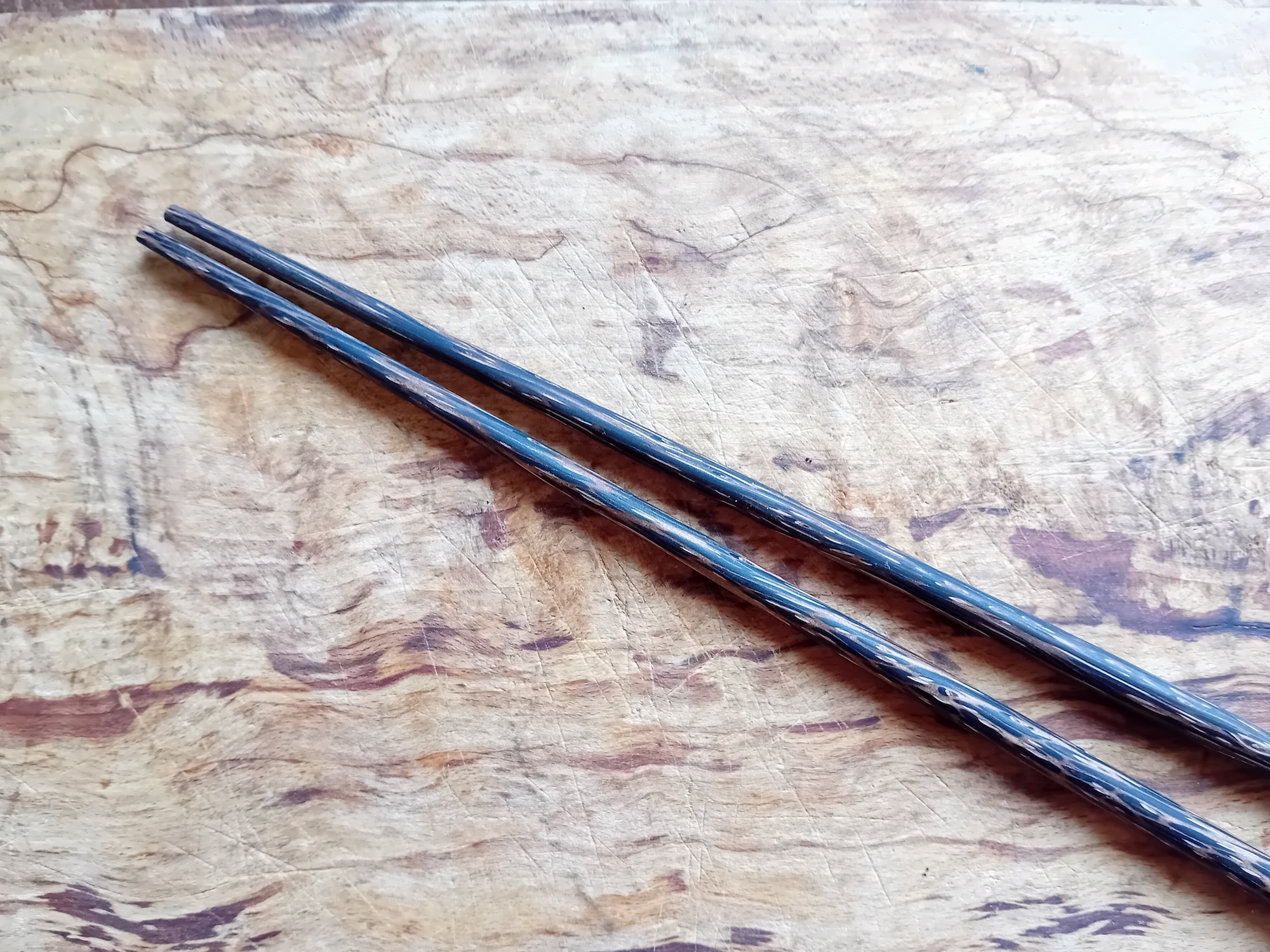
This week Wordfoolery brings you woggle because it sounds funny and conjures images of a wobbly teddy bear on a high wire. I’ve spent the last two weekends camping, first with my Beaver Scouts and then helping with the Cub Scouts because they were short-handed. It’s amazing how much gear children leave in lost property after a camp and woggles are very high on that list because they’re small and easy to misplace.

woggle I was really hoping that the woggle was named for a person – Mrs Esmerelda Woggle of Woggledon Hall, Surrey perhaps? Then I could have included it in my eponym series but although the woggle was invented, it wasn’t by Esmerelda.

The woggle was invented by an Australian Scout Bill Shankley in the 1920s as a device to tie a neckerchief – that’s the coloured scarf worn by Scouts and Girl Guides worldwide. There are a number of different designs now and some are only allowed for specific levels of Scouting achievement or particular groups but basically if it holds together the ends of your necker, it’s a woggle. Now I have woggle-envy after seeing the Maori head carved woggles used in New Zealand.

The word woggle can also be used as a verb. According to Merriam Webster it means to alter or waggle something. Presumably a Scout could woggle his woggle then? Or wiggle-waggle his woggle?

Now that’s why I enjoy a word like woggle.

I’ll be travelling for the next two weeks but will try to schedule a post here during my absence. Failing that, I’ll be wordfooling again on the 8th of July.

Until next time happy reading, writing and wordfooling.

Grace

Connect with me on Twitter, Facebook, and LinkedIn or sign up for free e-mail updates from this blog in the top right-hand corner of the page.


Tongue Twisters

She sells seashells...

She sells seashells…

Hello,

I don’t have a fun word this week, but I do have another way to fool with words – twist them. Tongue twisters are great for practising clear speech, especially with kids, but basically they’re fun. Here’s a selection of my favourites – can you add to it?

  • Round the rugged rock the ragged rascal ran.
  • She sells seashells on the seashore.
  • Peter Piper pecked a peck of pickled peppers.
  • Moses supposes his toes are roses, but Moses supposes erroneously when Moses supposes his toes are roses as Moses supposes his toes to be.
  • How much wood could a woodchuck chuck if a woodchuck could chuck wood?
  • A skunk sat on a stump and thunk the stump stunk, but the stump thunk the skunk stunk.
  • If two witches were watching two watches, which witch would watch which watch?
  • I’m not the pheasant plucker, I’m the pheasant plucker’s son. I’m only plucking pheasants until the pheasant plucker comes.

There’s a huge selection of twisters here if you’d like to continue tangling your tongue.

Until next time, happy reading, writing, and wordfooling,

Grace

Connect with me on Twitter or Facebook or sign up for free e-mail updates from this blog in the top right-hand corner of the page.

Fargling

rock paper scissorsHello,

This week’s word is fargling – from the verb “to fargle” and there’s some dispute over it being a word. I can’t find it in the major online dictionaries and there has been debate online since it was mentioned during an episode of “QI”. However I like it, and that’s good enough for inclusion on Wordfoolery.

As far as I can tell – fargling is any game which is used to resolve a dispute between two or more people. Now it probably wouldn’t work too well at a UN Security Council meeting but it’s perfect for determining who gets the first turn on the swing.

The classic American fargle is rock-paper-scissors, which is also known as roshambo. If you’re curious about the roshambo alternative I’m afraid I can’t help you but there’s a hiliarious post about it by Straight Dope.

But did you know that there are other ways to fargle?

For a start there’s Rock Paper Scissors Extreme – in my house this was invented by my son, but I suspect this one occurs everytime a player is unhappy with losing with the original format. You simply create random additional items – for example light-sabre beats paper, earthquake beats rock. You get the idea.

Rock-paper-scissors just didn’t feature in my childhood at all because I grew up in Ireland during the 70s. Modern Irish kids use it, having seen it on the television, but they also use the methods we had back then, plus a couple that are new to me.

1. All put a single foot into a circle and one caller rhymes “Igle, oogle, chocolate bobble, igle, oogle, out” while pointing at each foot in turn. The player with “out” is out. Then go again until only one child remains – the winner. I can’t find this one on the Web.

2. Put your fists into a tower at waist-height, alternating fists between players (a bit like when sports players layer up splayed hands in a circle) – then rhyme “one potato, two potato, three potato, four. Five potato, six potato, seven potato, more.” The fist from the bottom comes to tap the fist on the top on each change of potato and the one tapped on “more” is out. There are versions of this here and it looks like it made it to Sesame Street too. Warning – the fist bumping can get quite “vigorous” with older children.

3. Again putting in a single foot there’s the classic “Eeny, meeny, miney, moe, catch a tiger by the toe. If he hollers let him go. Eeny, meeny, miney, moe.” Except that’s not the version I learnt as a child, sadly it was the racist one which is not in use anymore, thank goodness. Even so the Irish version differs “Eeny, meeny, miney, moe. Catch a tiger by the toe. If he squeals, let him go. Eeny, meeny, miney, moe.” You’re out on “go”.

There are some more examples of international versions of these fargling rhymes in this Wiki post if you’re curious.

Until next time, happy reading, writing, and wordfooling.

Grace

Connect with me on Twitter or Facebook or sign up for free e-mail updates from this blog in the top right-hand corner of the page.

34 books and counting...

34 books and counting…

Hello,

Today’s word is tacenda (pronounced ta-chen-da) and it means things which are best left unsaid, the implied things in life. If there were an elephant in the room, that would be the tacenda. Unless you were in a zoo, I presume.

I love that there’s a word for things that shouldn’t be mentioned, isn’t that a little contradictory?

Happiness is a large book pile. I’m celebrating a birthday today and of course most of my gifts were books because my friends and family know of my addiction. My lovely man gave me the entire Game of Thrones series and the tacenda in my house today is that although they’ve entered the strict rotation of my To Be Read Pile, we all know I shall shamelessly allow them to skip to the top of the pile.

Until next time, happy reading, writing, and wordfooling,

Grace

p.s. there are 34 books in that pile, in case you’re curious. Plus dozens more ebooks.


Hello,

I’m back to my series of eponyms posts this week with the term Ferris Wheel. I couldn’t help wondering if it was invented by a man called Ferris? If so, was his surname Bueller and did he ever get a day off?

So I was delighted to find that ferris wheels were invented by George Washington Gale Ferris Jr for the World’s Columbian Exposition in Chicago in 1893 – the aim being to create a structure which would out-eiffel the Eiffel tower and in that he was pretty successful because the wheel carried 2.5 million passengers before its demolition in 1906. Sadly Ferris spent two years in the courts after the fair trying to claim profits he felt were owed to him and he died a year later. Even his ashes laid unclaimed for nearly a year. An unloved and sad end for a talented engineer who was born on St. Valentine’s Day. Ironically the French paid him a huge compliment by erecting a replica of his wheel for the Paris exposition in 1900. I also enjoyed Google’s doodle tribute to him on his 154th birthday.

As a scout leader who was recently teaching six year olds how to construct structures using sticks and elastic bands (for their first pioneering badge) I loved the illustration on Wikipedia of a ferris wheel (scroll down) made using the same concepts for a jamboree. It might be a little advanced for my kids though.

Unsurprisingly there has been some battling over the years to have the biggest and best ferris wheel and I’m no expert on that. The best known wheel in my neighbourhood would be the London Eye and it’s the largest in Europe at the moment but I am intrigued by the concept of eccentric wheels like Mickey’s Fun Wheel (predictably enough this is a Disney creation) when some of the cabins are fixed to the rim and others slide in and out as the wheel turns. I’m not sure my stomach could take that!

Until next time happy reading, writing and wordfooling,

Grace

addictive_blog_awardHello,

Many thanks to Kimberly Sullivan for nominating me for The Addictive Blog Award. Kimberly is one of the beta readers for my current novel-in-revision “Hooked” over on Critique Circle and she blogs about her own women’s fiction writing and her varied travels from her base in Rome. I’ll be using her local hints for my trip to Rome this June.

For this award I need to write about why I blog and then nominate ten other blogs that I find addictive.

Why I blog

I began blogging in the spring of 2009 with the aim of sharing my passion for unusual and fun words. My first word was flibbertigibbet, so that will give you the general idea. Since then I’ve explored the meaning and origins of strange words every week and sometimes talked about my writing, especially during November when I’m a Municipal Liaison for National Novel Writing Month or when I’ve had a new piece published. My love of gardening creeps in now and then too.

Nominate Others

The following ten blogs (in alphabetical order) are ones I visit regularly because I share their passions…

  • Carolann Copland of Carousel Creates – I was lucky enough to spend a blissful and educational weekend as Carousel Creates, the writing retreat in the Dublin Mountains, this spring and Carolann is a real lady.
  • Errol and Debbie at Nanotoons – I really shouldn’t waste time during November reading comics online and watching a crazy NaNo musical, but I can’t resist because they are just so funny and I think they might have based the insane ML on me.
  • Ficticious Amo -  anybody who’s actually tweeted with Toby from the West Wing is cool in my book but meeting AnneMarie in person at Carousel and listening to her amazing fiction made me realise that she’s effortlessly cool all by herself. Read her fiction and be transported into her world.
  • Hope Clark – Hope has been writing about writing for a long time and she brings her trademark common sense and wit to everything she does. I am a huge fan of her newsletters (which I have been honoured to write features for in the past) and her blog is great too.
  • The Irish Writers’ Centre Blog – I’m biased because I guest posted for this blog during NaNoWriMo 2011, but actually it’s an interesting blog because it is populated by guest posts by all levels and types of writers who are joined by just one thread – they write in Ireland.
  • Jade at CraftHope – regular readers of my blog will know that I craft. I crochet, sew, make jewellery, paint, make cards, and basically have more arts and crafts supplies in my home than is sensible. So when I came across Craft Hope it was a eureka moment. Jade, a stay-at-home mom of four in Texas, began the blog in 2009 as a way of co-ordinating hand-crafted gifts for those that need them. The first project generated 27 pillow dresses for kids in Mexico made by Jade and some online crafting friends. Since then it was blossomed beyond belief. She’s on project 21 now and has helped more than 100,000 children and adults in need right around the globe. There’s a great book of projects (and suggested venues to donate them too) and I cannot recommend her site and her projects enough. If you know anybody who crafts – direct them here so they can make a difference with their skills.
  • Kristin and Kelly at Dinner du Jour -  love good food for your family? Then you’ll love this blog written by two old friends, now seperated by the Atlantic and blogging together to bridge the gap. Kristin used to be in my knitting group and was a great knitter, but honestly – her recipes are even better.
  • The Madwoman in the Attic – I met Lisa in my role as a mentor for National Novel Writing Month. I think I’m a compulsive reader (witness my Reading 501 books blog) but she puts me in the shade and in her role as a bookseller for Waterstones bookshop in Drogheda she is ideally placed to promote great writing. Want something amazing to read? Ask Lisa.
  • PurlBee – my favourite crafting blog. Beautifully photographed, brilliantly detailed, and endlessly inspiring. Covers crochet, knit, sewing, embroidery, weaving and general craft.
  • QuickCrop – Andrew and Niall grow vegetables and they know what they’re talking about when it comes to growing them in Ireland, which is important because our growing season is different to the South of England which is where a lot of our seeds originate. Not only that but they’re irreverent bloggers who share useful tips for gardeners experienced and less so. They also make great raised bed kits that form the skeleton of my own veg plot in my back garden.

Thank you all for writing such great blogs. I love reading them. I’ll be back next week with more unusual words at Wordfoolery, but until then happy reading, writing, and wordfooling.

Grace


Hello,

This is the first in a series of blog posts I’ll be doing about eponyms so I better start by explaining what an eponym is. It’s a person or thing (real or fictional) for which an invention, discovery or object is named. You may be more familiar with the term if I give an example – Louis Braille is known as the eponymous inventor of the reading system for the partially sighted and blind.

My list of eponyms will be far from complete because I’m only choosing ones that I find intriguing, but if you’re interested in further information I can recommend the Wiki post about eponyms.

Cartoon of Captain Boycott (source Ask About Ireland)

Cartoon of Captain Boycott
(source Ask About Ireland)

This week’s eponym is one that every school-child in Ireland knows, and is probably the first eponym I ever encountered – boycott.

Captain Charles Cunningham Boycott was a land agent for Lord Erne on his Co. Mayo estate in Ireland. This was common practice at the time when many owners of large estates in Ireland actually lived in England and were “absentee landlords”. They’d hire an estate manager or land agent to collect the rents and manage the land in their absence. This wasn’t popular with the tenants.

In the autumn of 1880 there had been a bad harvest in the area and the Land League (like a union for tenants which was aiming for landownership to be transferred to the farmers) called on Boycott to ask for a rent reduction as a result. He refused.

The Land League, inspired by Charles Stuart Parnell’s speech on the subject,  “sent him to moral coventry” – all tenants refused to bring in the harvest or have any dealings with Boycott. Shops wouldn’t serve him. The post boy wouldn’t deliver the letters. Even the laundry refused their sheets.

He hired in 50 labourers from Cavan and Monaghan and they needed a thousand soldiers to protect them from the peaceful protests. It is estimated that it cost £10,000 to harvest £500 worth of crops.

The case became notorious and the Boycott family were forced to return to England in a hurry. The story was made into a film in 1947 starring Stewart Granger.

To this day boycott is used to describe any shunning of people, organisations, corporations, and countries which disrespect human rights.

Until next time happy reading, writing, and wordfooling,

Grace

Follow

Get every new post delivered to your Inbox.

Join 103 other followers